
Global financial markets are experiencing a wave of selling pressure that has spread from US and technology stocks to precious metals and commodities, amid growing expectations of continued monetary tightening by the US Federal Reserve, rising funding costs, and a decline in investor appetite for risk.
First: Gold and silver
Gold fell during today's trading to about $3,576 an ounce, a decrease of nearly 1.3%, after touching the level of $3,513, while its weekly losses are heading towards about 8%.
As for silver, it fell to about $42.41 an ounce, a decrease of approximately 0.8%.
These declines are due to the strength of the US dollar, expectations of continued interest rate hikes, and the liquidation of investment positions to provide liquidity and cover losses in the stock markets.
Silver faces additional pressure due to its link to industrial demand, making it more sensitive to concerns about a slowdown in global economic growth.
Second: US markets
US stock indices recorded the following declines in Thursday's session:
Dow Jones Index: 49,097 points, down 2.19%.
S&P 500 Index: Level 7,175 points, down 2.02%.
Nasdaq index: 23,879 points, down 2.25%.
Technology and artificial intelligence stocks continue to face selling pressure, amid concerns about their high valuations and the scale of spending on AI infrastructure compared to expected returns.
Nasdaq futures fell by about 1.9%, and S&P 500 futures by about 0.7% in early trading today.
Third: European and Asian markets
The sell-off extended to global markets, with Britain’s FTSE 100 index falling by about 0.66% to 10,383 points.
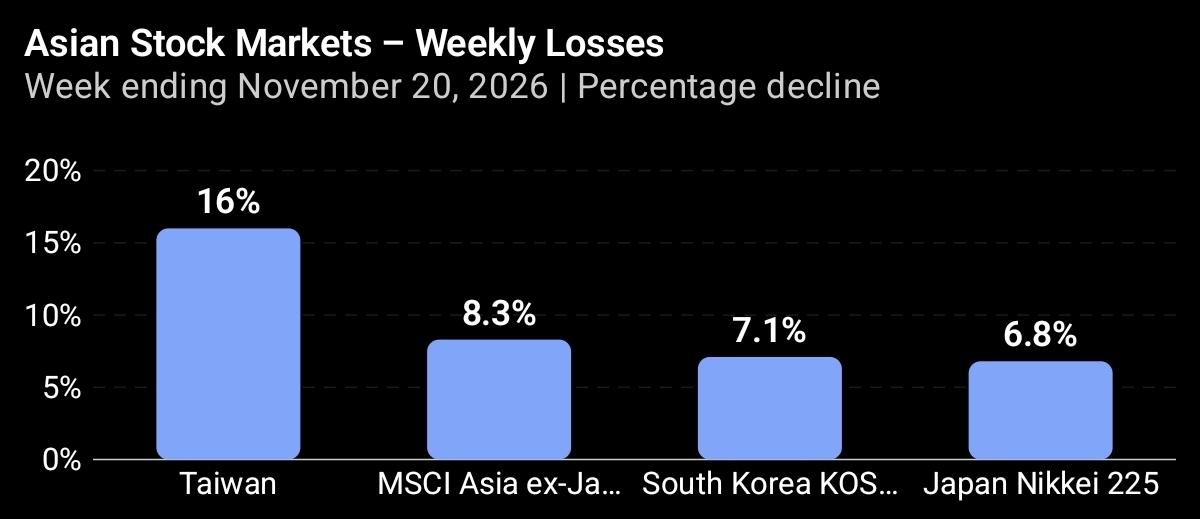
In Asian markets, Japan's Nikkei index fell by about 5%, while Asian stocks outside Japan are heading for weekly losses of nearly 8%, in one of the worst downturns in recent years.
Fourth: Oil prices
Oil prices declined during trading today:
Brent crude: $91.45 per barrel, down 0.6%.
US West Texas Intermediate crude: $82.40 per barrel, down 1%.
Oil prices are under pressure due to concerns about a global economic slowdown, despite ongoing geopolitical tensions in the Middle East.
Fifth: US interest rates and bond yields
Market estimates indicate a high probability that the US Federal Reserve will raise interest rates by 25 basis points during its December meeting.
In contrast, the yield on 10-year US Treasury bonds fell to around 4.99%, as some investors turned to government bonds amid declining stock markets.
Sixth: Economic Assessment and Forecasts
What is striking in the markets right now is the decline of gold in conjunction with stocks, even though the yellow metal is traditionally considered a safe haven.
This can be explained by the fact that investors are not only selling risky assets, but some of them may be forced to liquidate their investments to obtain cash and cover obligations and losses, especially with the high cost of borrowing.
As for gold, its decline from levels above $5,500 to the $3,500 area may make current prices the beginning of a region worth considering for long-term investment.
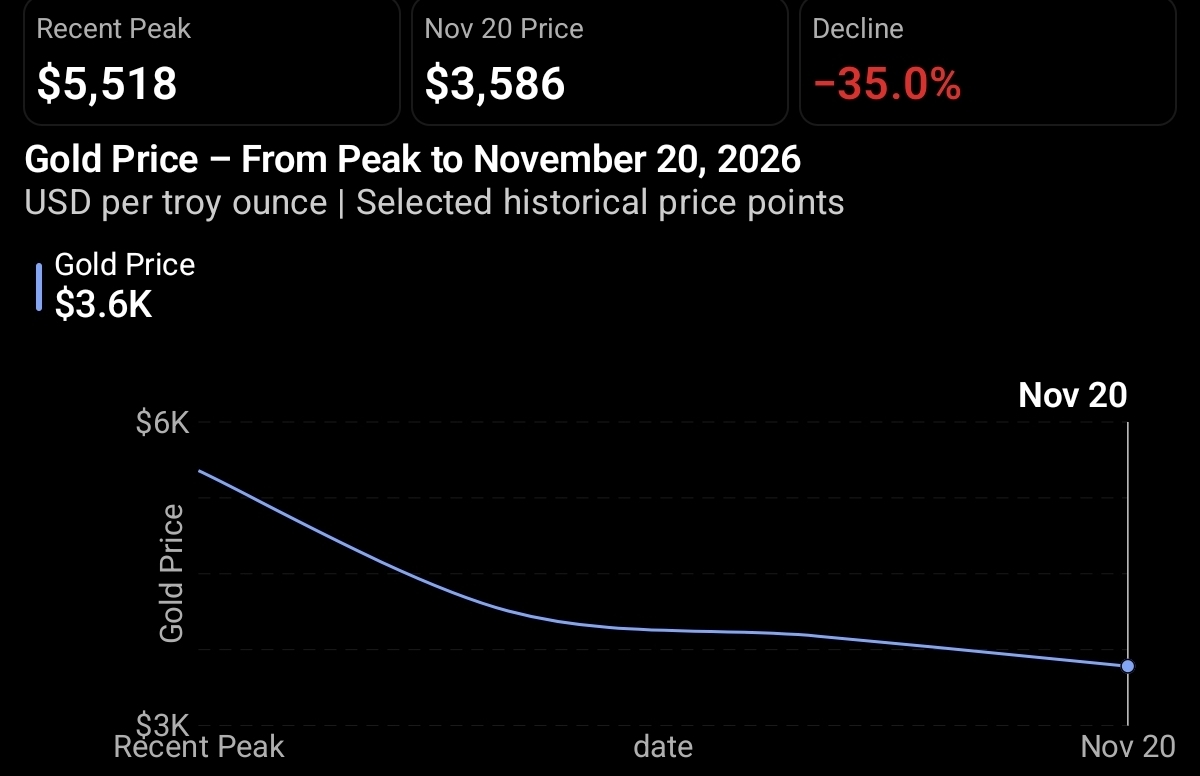
However, a continued decline towards the $3,000 level cannot be ruled out if liquidity pressures intensify and bond yields and the US dollar rise.
In the long term, a return to monetary easing and lower real yields could support gold prices, especially if economic pressures resulting from higher financing costs begin to negatively affect growth.
As for silver, it is expected to continue to fluctuate more than gold as a result of being affected by monetary policy and industrial demand at the same time.
Summary
Global financial markets are undergoing a broad asset revaluation phase, driven by rising financing costs, economic growth concerns, and liquidity pressures.
The direction of the US dollar, bond yields, and Federal Reserve decisions, along with the performance of technology stocks, will be key factors in determining the direction of markets in the coming weeks.