Forecasts over 6–12 months
First: Stock overview
Market estimates point to a positive outlook for SpaceX stock over the next twelve months, supported by strong growth in revenue and profits and expansion into artificial intelligence and space communications activities.
Despite this positive outlook, significant differences exist between the target prices of financial institutions, reflecting uncertainty about the fair valuation of the company and its ability to achieve sustainable returns from its massive investments.
Second: Average analyst expectations
Index Value |
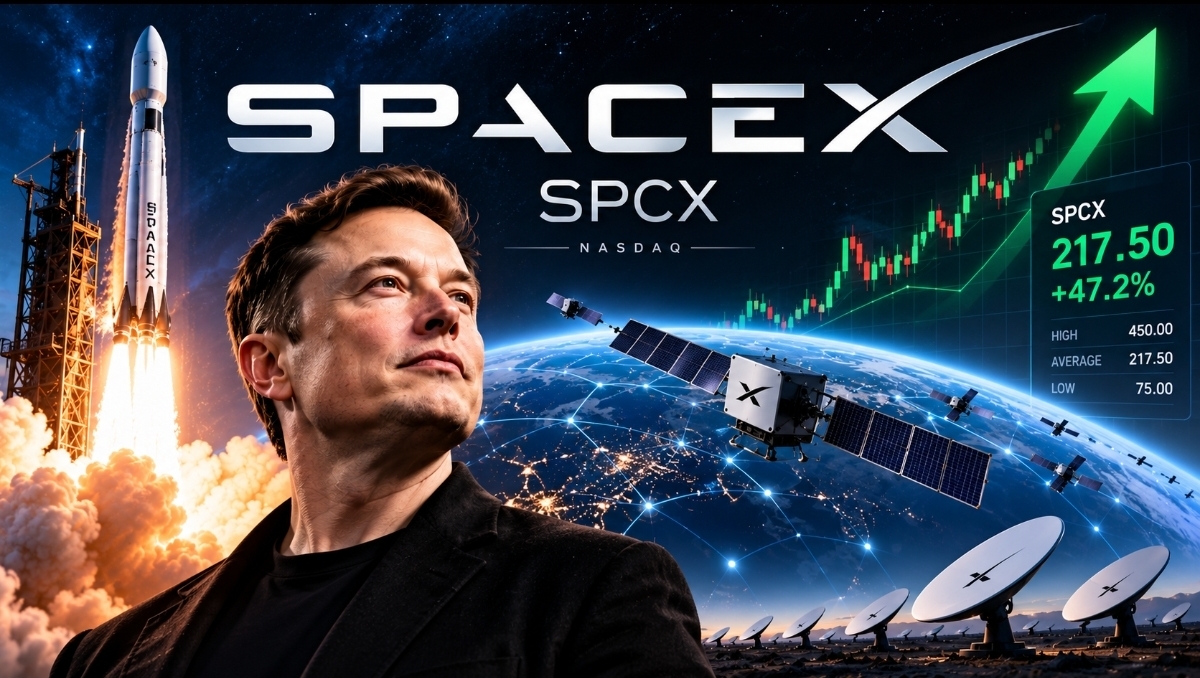
Average Target Price | $217.50
Potential increase | +47.2%
Lowest price target | $75
Highest price target | $450
Buy recommendations | 28 out of 35 analysts
Average Target Price | $217.50
Potential increase | +47.2%
Lowest price target | $75
Highest price target | $450
Buy recommendations | 28 out of 35 analysts
These estimates indicate that the majority of analysts are optimistic about the stock's medium-term performance, while the wide divergence in its valuations continues.
Third: Financial institutions' expectations
Financial Institution Target Price Recommendation JPMorgan | $500 | Buy
Goldman Sachs | $245 | Buy
RBC Capital | $225 | Buy
TD Cowen | $224 | Buy
Mizuho | $205 | Buy
Piper Sandler | $140 | Neutral
Goldman Sachs | $245 | Buy
RBC Capital | $225 | Buy
TD Cowen | $224 | Buy
Mizuho | $205 | Buy
Piper Sandler | $140 | Neutral
The discrepancy between JPMorgan and Piper Sandler's estimates shows a significant difference in assumptions regarding the future of AI revenue, capital expenditure, and the ability to generate sustainable cash flows.
Fourth: Price scenarios over 6–12 months
Scenario | Price Range | Key Drivers | Negative | $100–$140 | Valuation pressures and rising financing costs
Baseline | $190–$250 | Continued revenue and profit growth
Optimistic | $300–$400 | Accelerating AI growth and improved profitability
Baseline | $190–$250 | Continued revenue and profit growth
Optimistic | $300–$400 | Accelerating AI growth and improved profitability
These scenarios are analytical estimates and not target prices issued by financial institutions.
Negative scenario
The stock may come under selling pressure if revenue growth slows or investment financing costs rise, especially with continued high interest rates and a decline in investors' appetite for risk.
Basic scenario
It is assumed that strong growth will continue in space communications and artificial intelligence activities, with a gradual improvement in profitability and the company's ability to generate returns from its investment expansions.
Optimistic scenario
It relies on accelerating AI-related revenues, increased demand for Starlink services, and improved profit margins justifying high valuation multiples.
Fifth: The main factors affecting the stock
- Growth in the artificial intelligence sector: It represents one of the most important drivers of future revenues, but continued high growth rates are not guaranteed.
- Capital expenditure: Expanding AI infrastructure requires huge investments, which could put pressure on free cash flow.
- Starlink's expanding services: Growth in subscriptions and recurring revenue may contribute to supporting financial stability and improving earnings predictability.
- Market valuation: High valuation multiples may increase a stock's sensitivity to any results that fall short of investors' expectations.
- Interest rates: Continued rise in US bond yields could put pressure on growth company valuations, especially those of companies that rely on long-term future earnings.
Sixth: Overall assessment and expectations
The projections reflect optimism about SpaceX's future, especially with the company expanding beyond rocket launches into space communications and artificial intelligence infrastructure.
However, strong growth does not necessarily mean that the current market price represents an attractive investment opportunity , as a fair valuation depends on the company’s ability to convert increasing revenues into free cash flows and sustainable profits.
The $190–$250 range is used as the default baseline scenario for the next six to twelve months, versus the risk of a drop to $100–$140 if market conditions deteriorate or growth slows.
In summary: The company holds significant growth potential in the medium and long term, but high investment spending and wide variations in analyst valuations make the stock vulnerable to high price volatility.
This is not an investment recommendation, but rather an analysis of market expectations and the factors related to and affecting the stock price.