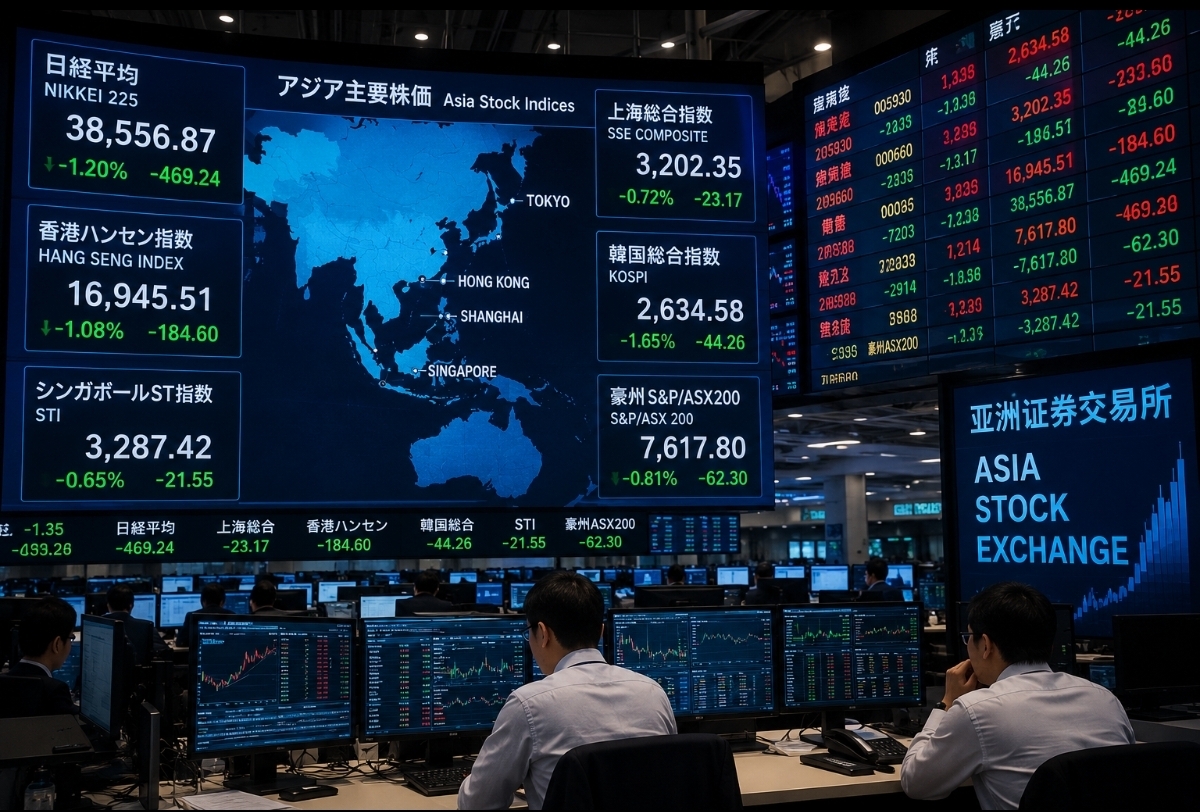
First: Asian markets decline sharply amid concerns about AI company profits
Asian markets experienced a sharp sell-off today, pushing the MSCI Asia Pacific ex-Japan index to its lowest level in more than two months, amid growing concerns about the future earnings of semiconductor and artificial intelligence companies.
South Korea was the hardest hit, with the KOSPI index falling by more than 6%, prompting the Seoul Stock Exchange to activate a temporary mechanism to limit automated sell orders.
The most notable declines in indices and stocks during the session :
Asian stock market index closing prices – Tuesday, October 13, 2026
Closing Index (points) Change in points Change %
KOSPI – South Korea 6,035.35 −348.89 −5.46%
Nikkei 225 – Japan 67,777.52 −1,253.40 −1.82%
TAIEX – Taiwan 48,341.31 −960.65 −1.95%
CSI 300 – China 4,275.68 −12.30 −0.29%
Hang Seng – Hong Kong 24,345.22 +74.02 +0.30%
Shanghai Composite – China 3,800.86 +3.62 +0.10%
ASX 200 – Australia 8,783.90 +0.73 +0.01%
Straits Times – Singapore 5,430.50 +15.02 +0.28%
What are the reasons for the decline?
The sell-off came after reports of technological progress made by the Chinese company CXMT in the memory chip industry, raising concerns about increased competition with Korean and American companies, and the possibility of lower chip prices and reduced profit margins.
Concerns are focused on companies that have benefited from massive spending on artificial intelligence infrastructure, as investors begin to reassess these companies' ability to maintain their high profit growth rates and market valuations with the entry of new competitors.
The pressure also extended to Chinese stocks, with the CSI 300 index falling to its lowest level in more than a year.
━━━━━━━━━━━━━━━━━━━━
Second: Results of US banks for the third quarter of 2026
Four of the largest US banks announced their third-quarter results, showing growth in profits and revenues compared to the same period last year.
1. JPMorgan Chase – JPMorgan
• Net profit: $15.3 billion, compared to $14.4 billion, an increase of 6%.
• Revenue: $50.2 billion, compared to $46.4 billion, an increase of 8%.
• Earnings per share: $5.57.
Despite profit growth, the results fell short of expectations, impacted by losses in the securities portfolio amounting to $658 million and a slowdown in some trading and investment services activities.
CEO Jamie Dimon warned of the risks of inflation, the US fiscal deficit, rising interest rates, and geopolitical tensions.
━━━━━━━━━━━━━━━━━━━━
2. Goldman Sachs
• Net profit: $5.29 billion, compared to $4.10 billion, an increase of 29%.
• Revenue: $18.68 billion, up 23%.
• Earnings per share: $17.01.
The results exceeded market expectations, supported by a 72% increase in equity trading revenues to $6.44 billion and a 21% growth in investment banking fees to $3.22 billion.
Asset and wealth management revenues also rose by 14%, while revenues from trading bonds, currencies and commodities fell by 1%.
━━━━━━━━━━━━━━━━━━━━
3. Citigroup
• Net profit: $5.2 billion, compared to $3.8 billion, an increase of nearly 40%.
• Revenue: $23.85 billion, compared to $22.1 billion, an increase of 8%.
• Earnings per share: $2.85.
The results exceeded expectations, with revenues reaching their highest level for the third quarter in nearly ten years.
The growth was supported by a 15% increase in revenues from banking services and wealth management, despite a decline in net profits of about 10% compared to the second quarter of this year.
━━━━━━━━━━━━━━━━━━━━
4. Wells Fargo
• Net profit: $5.95 billion, compared to $5.59 billion, an increase of 6.5%.
• Revenue: $21.87 billion, compared to $21.44 billion, an increase of 2%.
• Earnings per share: $1.87.
Profits slightly exceeded expectations, while revenues fell short.
The bank benefited from loan growth and improved commercial lending after the removal of previous regulatory restrictions on the size of its assets.
Chief Executive Charlie Scharf noted the continued strength of the financial positions of consumers and businesses, while warning of the impact of rising interest rates, energy prices and inflation.
━━━━━━━━━━━━━━━━━━━━
The results of US banks reflect the continued strength of the banking sector, supported by loan growth (though at risk of slowing due to higher financing costs), resilient consumer spending, and a recovery in trading and investment services activities.
In contrast, the sharp losses in Asian markets reveal an important shift in investors' assessment of the artificial intelligence sector, where concerns are no longer just about the future of demand, but also about companies' ability to maintain their high profit margins as Chinese competition intensifies.
Global markets thus face two major challenges: continued inflationary pressures and high interest rates, and the potential for a revaluation of technology stocks that have benefited from the artificial intelligence boom.