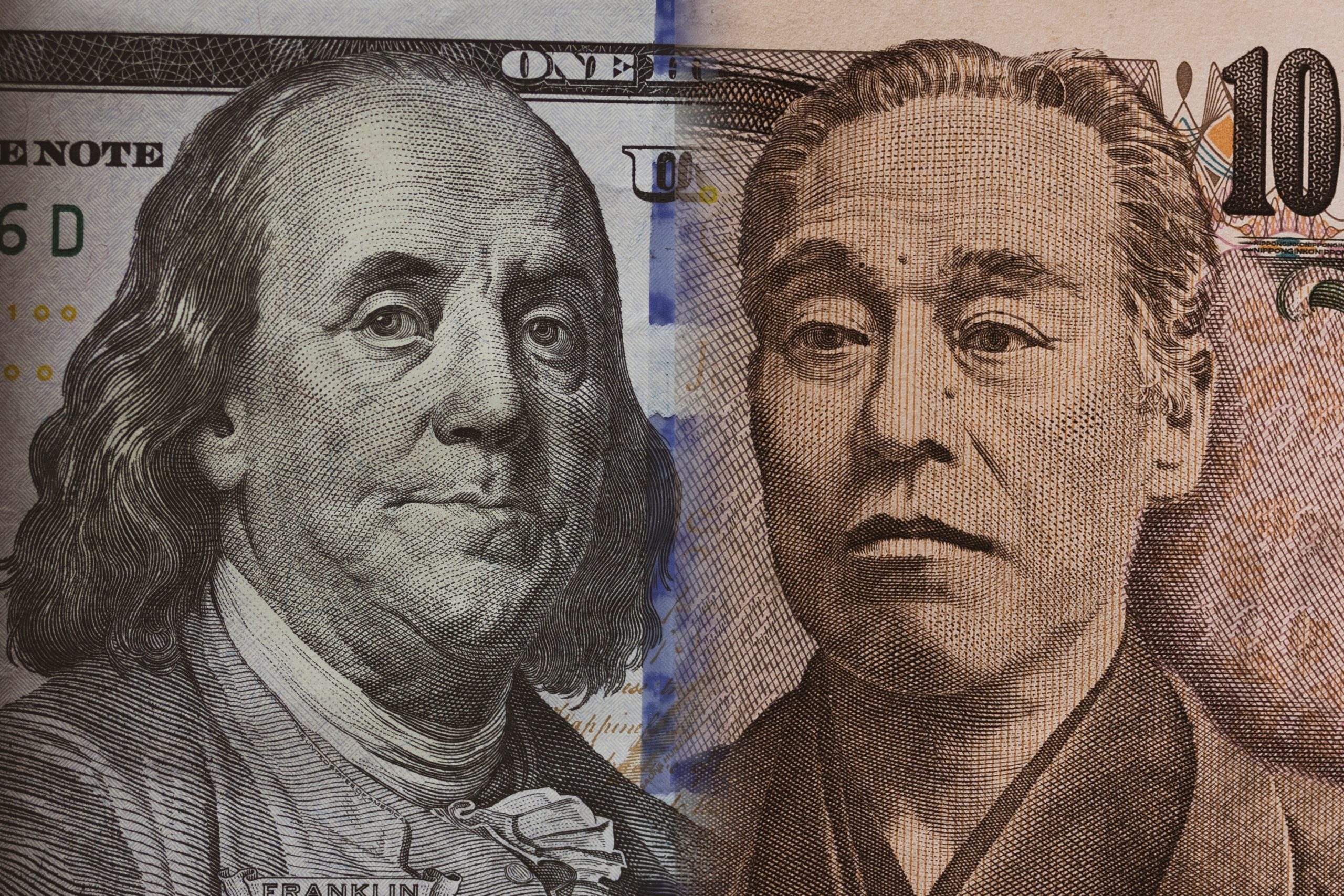
The Bank of Japan today raised its interest rate by 25 basis points to 1.25% , continuing the gradual shift in Japanese monetary policy after many years of extremely low interest rates.
The decision itself was not a surprise to the markets, and therefore the focus quickly shifted from the question "Will the bank raise interest rates?" to the more important question: "What will it do next?"
Inflation has become the main concern
The most significant change in the Bank of Japan's tone is its view of inflation. After years in which the main challenge was how to sustainably achieve the 2% inflation target, the bank is now more concerned with the risk of continued price pressures and inflation exceeding target levels.
Higher production costs and wholesale prices, and the transfer of a larger portion of these costs to the consumer, mean that the bank can no longer treat inflation as merely a temporary phenomenon.
However, the Bank of Japan believes that monetary policy remains relatively accommodative even after raising interest rates to 1.25%, leaving it room to continue tightening if the economy and inflation continue on their current trajectory.
Oida leaves all options open
Bank Governor Kazuo Ueda's statements were perhaps more important than the decision itself.
Ueda explained that the bank wants to prevent core inflation from settling above 2% for an extended period, and noted that Japanese monetary policy has entered a different phase than in previous years.
At the same time, he did not provide a firm path for interest rates. He did not rule out raising them again at subsequent meetings if the data warranted it, and he left the door open to the possibility of taking further steps if inflationary pressures intensified.
The main idea in Oida's message is that moving gradually and early may be better than waiting and then having to raise interest rates sharply later .
Why hasn't the yen risen?
Herein lies the most significant paradox of today's meeting.
In theory, raising Japanese interest rates should be a positive factor for the yen, but the Japanese currency fell against the dollar after the decision .
The reason is that the markets were already expecting the increase, so raising interest rates by 25 basis points did not offer a new surprise that could prompt investors to buy the yen aggressively.
Most importantly, the bank did not give the market a clear commitment to a rapid series of upcoming increases, and the fact that two members voted against raising interest rates showed that the bank's board is not entirely unified about the pace of tightening.
The interest rate differential continues to weaken the yen.
Even after Japanese interest rates reached 1.25% , the return on Japanese assets remains low compared to the United States.
This means that one of the most important factors that has put pressure on the yen in recent years has not disappeared: the interest rate and yield differential between Japan and major economies, especially the United States.
Therefore, a rise in Japanese interest rates alone does not guarantee a rise in the yen. What matters to the currency market is the speed at which interest rates rise in Japan compared to the speed of change in US interest rates.
What's next?
Today’s meeting confirms that Japan is indeed moving towards a tighter monetary policy, but the Bank of Japan still wants to implement this shift cautiously.
For the yen, the next phase will be mainly linked to the trajectory of Japanese inflation, the timing of the next interest rate hikes, and the path of the US Federal Reserve, and thus the evolution of the yield differential between the two countries.
In short, the Bank of Japan has become more hawkish, but markets want more than one interest rate hike to fundamentally revalue the yen.
Therefore, the market's message today was not that raising interest rates is unimportant, but rather that a previously expected increase alone is not enough to change the direction of the currency; what will determine the true direction of the yen is what comes next.